The Coolest Streets in Lisbon
Where the city still feels most itself
Lisbon / Culture
From antique-lined stretches in São Bento to nightlife arteries near Cais do Sodré and the quieter elegance of Príncipe Real, these are the streets in Lisbon worth walking properly.
The Coolest Streets in Lisbon
Cities are easiest to misunderstand at district level. Neighbourhood names are too large, too soft, too good at hiding the real thing. “Príncipe Real,” “Chiado,” “Cais do Sodré,” “Graça” — all useful, all real, all still too broad. What you actually remember later is usually more specific than that. A staircase. A corner kiosk. A run of shopfronts. A street where the mood changed. A block that made the city feel briefly more legible.
That is why the coolest streets in Lisbon matter more than generic neighbourhood guides. The city reveals itself in stretches. Some streets still hold trade and texture. Some have become nightlife corridors. Some are best in the morning, before anyone has started performing Lisbon back at itself. Some are all about shops, antiques, bars or old facades. Some are not “cool” in the loud sense at all; they are just streets where the city seems to gather its better instincts in one place.
Lisbon is also unusually good at this because of its topography. Streets are not just connectors here. They are gradients of light, sound and pace. A few minutes of walking can change the whole logic of an area. That makes the right street list much more useful than another empty roundup of “best neighbourhoods.”
This piece works best as part of a wider cluster alongside Best Wine Bars in Lisbon Right Now, Best Rooftop Bars in Lisbon, Best Breakfast Spots in Lisbon, Culture, Drinks, and the future Lisbon hub.
The short version
If you want the strongest Lisbon street walk right now, start with Rua de São Bento for antiques and quiet city elegance, Rua Nova do Carvalho for nightlife residue and modern Cais do Sodré energy, Rua da Boavista for one of the city’s more convincing transitional streets, Rua Dom Pedro V for Príncipe Real and Bairro Alto overlap, and Rua de São Paulo if you want to feel how quickly Lisbon can move from river-facing day city to night city.
Rua de São Bento
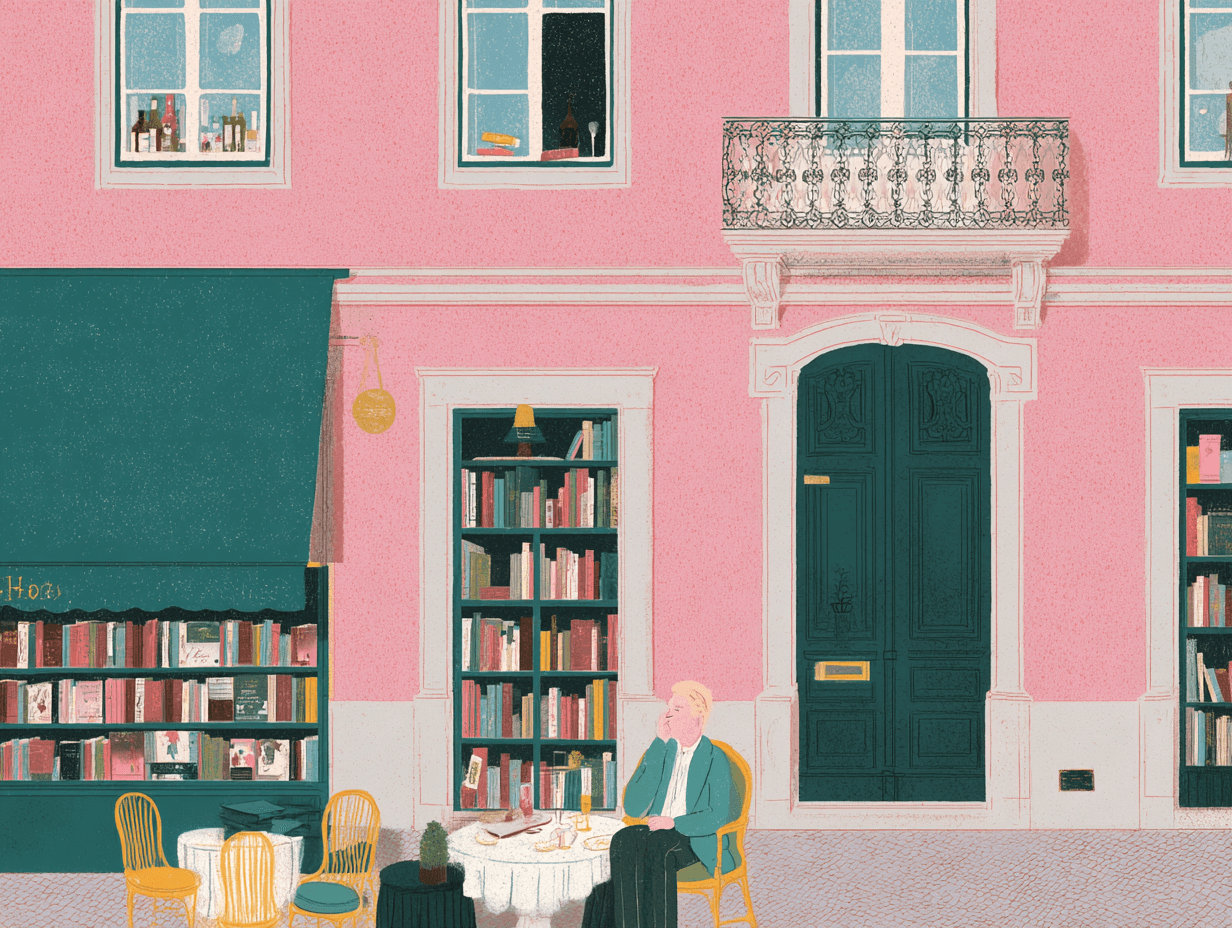
Rua de São Bento is one of the best streets in Lisbon because it still feels structured by actual trade. It is known for antiques, vintage furniture and a quieter kind of browsing that gives the street more weight than a strip built only around food and drinks. The atmosphere is not loud. It is composed, a little old-world, and all the better for it.
That matters because a lot of “cool streets” lose longevity once they become too monocultural. São Bento avoids that. It has enough visual identity, enough specialist shops, and enough residential calm to keep the whole thing from becoming a theme.
It also sits between several useful Lisbon moods. You can fold it into Príncipe Real, Praça das Flores, Estrela or even drift down toward Santos. The walk itself becomes part of the day.
Primary references: Visit Lisboa on Príncipe Real and Condé Nast Traveler’s Lisbon shopping guide noting Rua de São Bento’s antiques and vintage furniture scene
Rua Nova do Carvalho
Rua Nova do Carvalho — still widely recognised through its Pink Street afterlife — is one of the clearest examples of Lisbon turning a nightlife corridor into a brand and then somehow still retaining enough actual energy for the place to function.
That balancing act is why it belongs here. Yes, it is known. Yes, it is no longer a secret. But it still matters because it condenses a particular version of Lisbon into one strip: bars, turnover, noise, movement, river-near atmosphere, and the sense that the city is trying to sell itself while still having enough life left to justify the sale.
This is not where you come for serenity. It is where you come to understand one visible layer of modern Lisbon.
Rua da Boavista
Rua da Boavista is one of Lisbon’s more convincing transitional streets. It does not announce itself as loudly as some of the city’s more hyped stretches, but that is exactly why it feels stronger. It sits in the orbit of Cais do Sodré and Santos while carrying some of the movement between them, which means you get a street that feels mixed rather than over-defined.
That mixture is often where Lisbon is best. A few bars, a few food spots, some daily life, some through-traffic, some light industrial residue, some newer city polish. Nothing here feels too complete, and that incompleteness is attractive.
Rua de São Paulo
Rua de São Paulo is one of the best streets in Lisbon for seeing the city change register in real time. It has river-near openness at one end and denser nightlife logic as it stretches inward. Visit Lisboa has highlighted the street itself in recent social coverage, which makes sense: it is one of those streets where Lisbon’s newer visual identity is easy to feel without becoming entirely synthetic.
What makes it good is not purity but transition. It works in the daytime, when the city still feels broad and slightly slower, and it works later, when everything around Cais do Sodré starts to tighten and brighten.
Rua Dom Pedro V
Rua Dom Pedro V earns its place because it sits in one of Lisbon’s most useful overlaps: Príncipe Real and Bairro Alto, elegance and nightlife, looking and moving, day and late. Streets in border zones often tell you more about a city than streets deep inside one single identity, and this is a good example of that.
Walk it properly and you feel the city switching gears without ever fully committing to one version of itself. That is a very Lisbon quality.
Calçada de Graça
If you want a cooler street in Lisbon in the less polished, more atmospheric sense, Calçada de Graça is hard to ignore. Graça is one of the city’s strongest districts for viewpoints and a more textural sense of local life, and the sloping streets there make Lisbon feel less arranged. That matters. Cool is often just the point where a city stops tidying itself up for you.
Visit Lisboa treats Graça as one of the city’s key historic neighbourhoods, and the street logic up there helps explain why.
Rua da Escola Politécnica
Rua da Escola Politécnica is a quieter, smarter inclusion. It gives you a different side of central Lisbon — one tied to gardens, institutions, Príncipe Real adjacency and a more measured pace. Not every cool street has to be a nightlife strip. Some win because they organise the city beautifully.
This is one of those streets that works especially well in the late morning or afternoon, when Lisbon still feels bright and spacious rather than socially compressed.
How to walk them properly
Start around São Bento and Príncipe Real if you want the most satisfying daytime route. Move toward Rua da Escola Politécnica and Rua Dom Pedro V, then drop down later toward Rua da Boavista, Rua de São Paulo and eventually Rua Nova do Carvalho if the day is turning into night.
Do Graça separately, and do it slowly. It deserves a different pace.
Final word
The coolest streets in Lisbon are not always the loudest or the most photographed. Usually they are the ones that still let the city behave like itself: mixed, sloped, slightly uneven, full of small transitions and better when walked than explained.