Your Phone Has More Than One Expiry Date
The battery, the software and the repair bill run on different clocks. Buying a phone that lasts means understanding all three.
Global / Tech
A phone rarely becomes useless in one dramatic moment. First, it needs charging before dinner. Then the screen repair looks expensive. Eventually, an update stops arriving. By the time you replace it, several different problems have quietly become one verdict: old.
That verdict deserves a closer look. A scratched phone with a healthy battery and years of security support can be a better long-term proposition than a pristine model approaching the end of its update schedule. The visible condition of the object tells only part of the story.
There is no single lifespan that applies to every smartphone. Its useful life depends on physical condition, replaceable components, software support and whether repairs remain worthwhile. A promise of seven years of updates is not a promise that the original battery will perform like new for seven years. Equally, a worn battery does not establish that the rest of the phone needs replacing.
The useful question is therefore more precise than “Is my phone old?” Ask which part of its future has become uncertain, and whether that uncertainty can be resolved without buying the whole object again.
The three clocks inside every phone
A smartphone has a physical clock: batteries age, surfaces suffer damage and components can fail. It has a software clock: operating-system and security support follow a manufacturer's schedule. It also has an economic clock: eventually, the cost and inconvenience of a repair may outweigh the useful time you expect to gain.
Those clocks can disagree. Imagine two identical phones purchased on the same day. One has lived in a case, had a battery replacement and remained otherwise reliable. The other has a damaged camera and intermittent charging. Their model age is identical. Their remaining value to their owners is not.
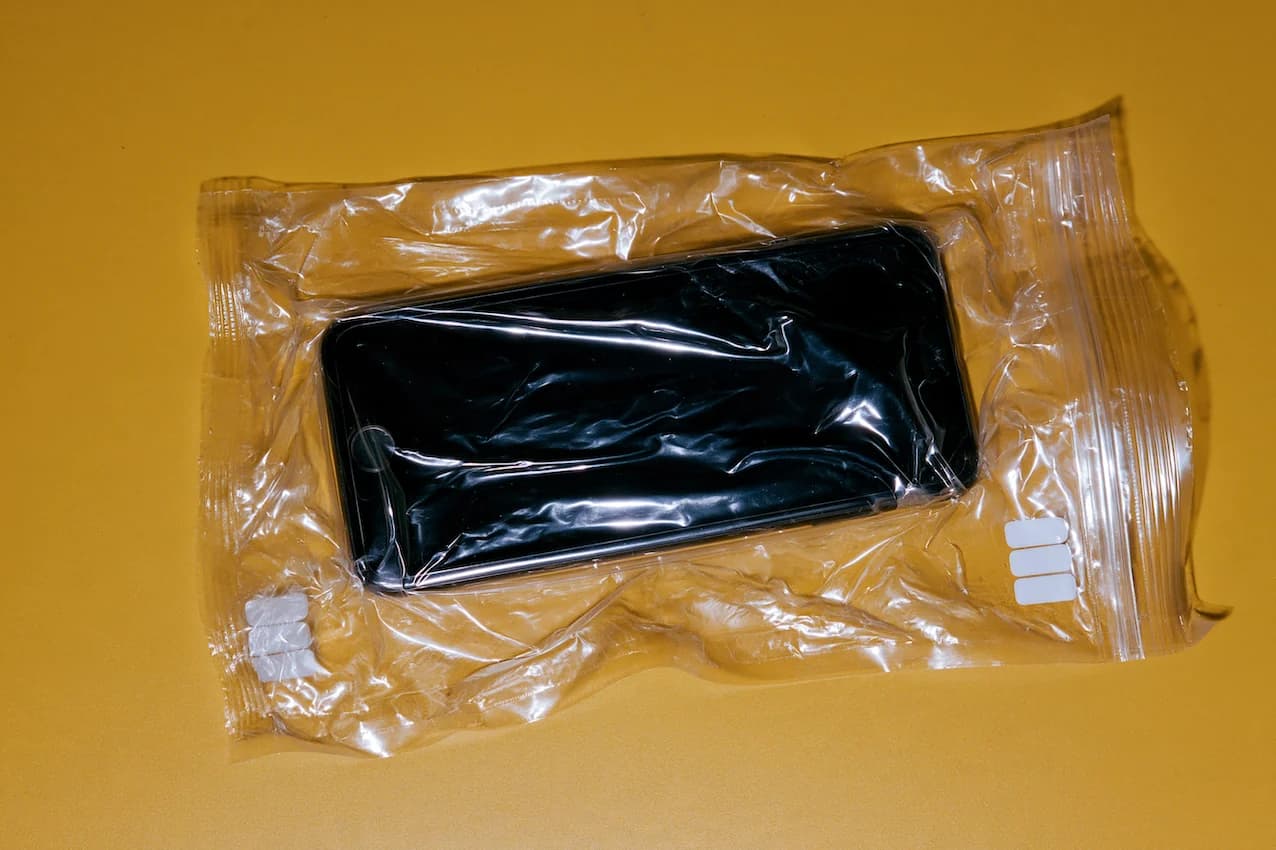
Now imagine a third device, still boxed in a shop. It looks new because nobody has used it. But if its support period began when the model launched, the software clock has been running throughout its time on the shelf.
This is why lifespan is a poor thing to infer from the word new. A meaningful comparison needs the model's history, the manufacturer's promises and the condition of the particular unit you are buying.
| Clock | The question to ask | Evidence to look for |
|---|---|---|
| Battery | Will it get through my day, and can it be replaced? | Battery condition, diagnostics and a repair quote |
| Software | How much support remains? | The manufacturer's model-specific support policy |
| Hardware service | Can an important part still be obtained? | Parts availability and repair options |
| Personal usefulness | Does it still do the jobs I need? | Your actual apps, storage needs and use |
| Economics | What does keeping it cost compared with replacing it? | Total costs over the same period |
A tired battery is a component problem
Apple describes rechargeable batteries as consumable components. Its explanation of iPhone performance distinguishes the time between charges from the battery's total usable lifespan. Chemical ageing can reduce both stored charge and the ability to supply peak power; in some circumstances, the phone manages performance to prevent unexpected shutdowns. Apple says replacing an aged battery can help performance affected by this process. Apple's explanation of battery ageing and performance.
The distinction matters because a user experiences the whole phone. If an app opens slowly or the device dies on the way home, it is natural to blame the object in your hand. Yet the underlying problem may be narrower than the proposed solution of replacing it.
A sensible first step is diagnosis. Find out whether the difficulty is the battery, a charging accessory, a damaged port, storage pressure or something else. A repair quote is much more informative when it names the fault it will fix. “It feels slow” is a description of an experience, not a component-level diagnosis.
Nor should a replacement battery become an automatic instruction. If the phone has other faults, little remaining support or no longer meets your needs, restoring its battery may buy less useful time than you expect. The repair decision concerns the device as a whole, even when the repair itself concerns one part.
Seven years from when?
Google says Pixel 8 and later phones receive seven years of operating-system and security updates, measured from when the device first became available on the Google Store in the United States. That starting point is crucial: it is not the date each individual customer opens the box. Google's Pixel update policy.
Consider a hypothetical model with a seven-year support window that launched three years ago. Purchasing it today does not restart the clock. You are evaluating roughly four remaining years under that original window, subject to the exact dates and policy for the model.
This does not make older stock a bad purchase. It changes the comparison. A lower price may compensate for a shorter remaining support period, especially if you only need a device for a limited time. But a discount described without the support end date leaves out a material part of what you are buying.
For refurbished phones, ask about two separate histories. One is the history of the physical unit: repairs, battery condition and testing. The other is the history of the model: launch date and remaining support. A refurbishment can improve the first without extending the second.
A seller's warranty is another clock again. It describes a commitment to the buyer under specified conditions; it should not be mistaken for a manufacturer's promise to keep developing software indefinitely.
What the EU's rules actually change
EU ecodesign requirements apply to covered devices placed on the market from 20 June 2025. The European Commission lists battery durability of at least 800 charge-and-discharge cycles while retaining at least 80% of initial capacity, requirements for critical spare parts for seven years after the model's EU sales end, and longer operating-system support. The scope has exceptions, so the requirements should not be applied indiscriminately to every device. European Commission: smartphones and tablets.
The accompanying label shows information including battery endurance, repairability and resistance to drops. Its QR code leads to model information in the European Product Registry for Energy Labelling. This gives buyers a way to compare some durability characteristics alongside the familiar processor and camera specifications. European Commission's label guide.
The significance is cultural as well as technical. A camera specification advertises what a phone can do on its best day. A repairability score asks what happens after a bad one. Putting both in the buying conversation makes the future condition of the product part of its present value.
However, a test result remains a test result. It helps compare products under stated conditions. It cannot predict every owner's pattern of use, every accident or every repair bill. Read the scope and the model information, rather than converting a label into a personal guarantee.
Repairable and worth repairing are different questions
A phone may be technically repairable while the available repair is unattractive. The part could be costly. The appointment could mean days without a device. Several faults could need attention at once. These are practical constraints, especially for someone whose phone is also their work equipment.
Apple's service policy illustrates why hardware support deserves its own check. The company describes service and parts availability for at least five years after it last distributed a product for sale, with longer periods in some circumstances. It distinguishes products classed as vintage from those classed as obsolete. The exact model and applicable local provisions matter. Apple's out-of-warranty service policy.
Before approving a repair, ask what the quotation includes: the component, labour, diagnosis, any resulting warranty and any limitation the repairer expects afterwards. Establish whether the quoted price is the final price or an estimate that may change once the phone is opened.
Also consider the inconvenience honestly. A cheap repair that repeatedly fails is expensive in a way the invoice does not record. Conversely, a straightforward repair from a dependable provider can preserve the device you already know, with less disruption than setting up a replacement.
The repair calculation that beats “it's already old”
The purchase price of your existing phone is money already spent. It explains how you got here; it does not decide what the best next step is. Compare the additional cost of keeping the device with the additional cost of replacing it over a period that makes sense for you.
Here is a deliberately simplified example, not a quotation or a market-price claim. Suppose a repair costs £100 and you reasonably expect it to deliver another two useful years. That is £50 per additional year. A £600 replacement kept for four years costs £150 per year before resale value, further repairs or other differences.
| Illustrative option | Upfront cost from today | Assumed useful time | Simple annual cost |
|---|---|---|---|
| Repair the existing phone | £100 | 2 years | £50 |
| Buy a replacement | £600 | 4 years | £150 |
This arithmetic is a starting point. The cheaper option only works if its assumptions work. A repair that extends physical operation beyond the phone's useful software life may not deliver the two years you have assigned it. A replacement that saves you substantial working time may justify a higher annual cost.
The point is to expose the assumptions. “A repair is half the phone's second-hand value” can sound decisive, but second-hand value alone does not measure how much service that repair buys you. The relevant comparison is with your realistic alternative, including the time you expect to use it.
The part of ownership you cannot hold
A phone is physical property, but many of the things that make it useful depend on organisations continuing to provide software and services. This is the same tension explored in LocoWeekend's feature on whether you own the films and games you buy online.
For a phone, the hardware can remain on your desk while the surrounding ecosystem changes. That does not mean the manufacturer is responsible for every third-party app indefinitely. It means a long-term buying decision needs to account for more than whether the screen still lights up.
List the jobs that would make the phone unacceptable to you if they stopped working. Your list might include communication, authentication, particular work software or an accessibility feature. Check those requirements against the device you are considering, rather than assuming that “still works” has one universal meaning.
This is also why a simple spare phone and a primary work phone can have different replacement thresholds. The same object may be suitable for one role and unsuitable for another. Longevity is useful service delivered, not merely the number of years before an object is discarded.
Keeping it longer has to mean using it longer
The Global E-waste Monitor 2024 reports that the world generated 62 million tonnes of electronic waste in 2022, with 22.3% documented as formally collected and recycled. Those figures cover electronic waste broadly, not smartphones alone. They establish the scale of a wider materials problem rather than a precise footprint for your next upgrade. Global E-waste Monitor 2024.
A phone placed in a drawer has not automatically provided extra useful life. It may be a sensible backup, but calling every retained device “still in use” would confuse possession with service. Decide whether the phone has a real next role, whether someone else could use it or whether it has reached the point of appropriate collection and recycling.
The same distinction applies to the difficulty of recycling clothes: keeping an item useful and recovering materials from an unusable item are separate achievements. Neither should be used as a vague reassurance that consumption has no consequences.
For phones, a credible longer-life offer therefore needs more than an environmental slogan. It needs accessible repair information, understandable support dates and an owner who can make a realistic plan for the device's next few years.
What to check before your next upgrade
Write down the problem you are trying to solve before looking at replacements. Be specific: “It cannot get through my shift” is more useful than “It is getting old.” Then check the current phone's support position and obtain a diagnosis or quote if the issue appears repairable.
For any replacement, record the model's first release date, the support policy's starting point, the remaining support period and the condition of the battery. If it is used or refurbished, establish what testing and repairs the seller actually performed. A cosmetic grade does not answer every one of those questions.
Next, compare total cost over a plausible ownership period. Include an anticipated repair only if you have a reason to expect it and a defensible price. Avoid pretending that uncertain resale values or perfectly trouble-free years are guaranteed.
Finally, decide what will happen to the old device. A planned transfer to another person or role makes more sense than accumulating a drawer of unresolved decisions. Follow the manufacturer's instructions for backup, account removal and erasing personal data before transferring it.
A good phone should become familiar before it becomes disposable. The most useful progress may be a device whose future is easier to understand: a battery you can replace, software with a clear horizon and repair costs that do not require guesswork. Those are specifications worth wanting, even when they do not make the launch video.
Sources checked on 19 September 2026. Manufacturer policies are model- and market-specific. The cost comparison is illustrative; it is not a repair quote or a forecast.